
 By Admin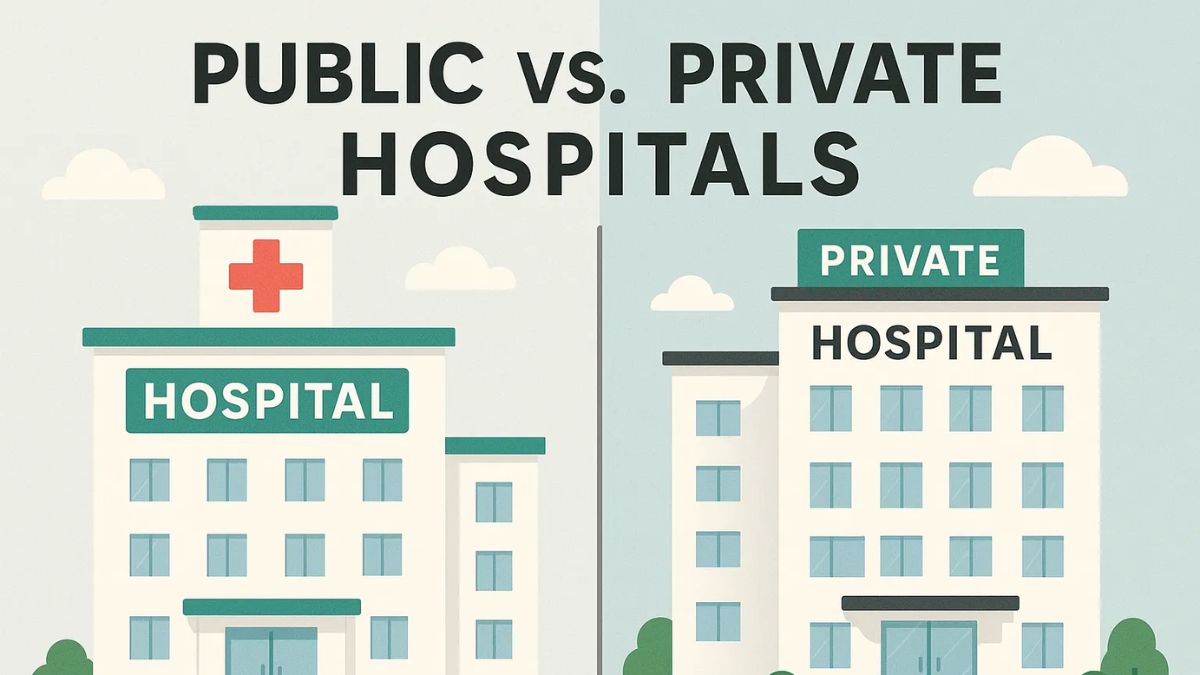
Public and private hospitals play vital yet distinct roles in any healthcare system. Both provide medical treatment, emergency care, and specialist services, but the way they function, the kind of patient experience they offer, and their cost structure differ significantly. Choosing between them often depends on personal priorities such as affordability, comfort, convenience, urgency, and insurance support.
This in-depth article breaks down the key differences between public and private hospitals, helping you understand how each system works and which one might be more suitable in different situations.
What Makes Public Hospitals Different from Private Hospitals?
Public hospitals are funded and managed by the government, while private hospitals operate under private ownership. This single difference creates a ripple effect that impacts service delivery, cost, patient experience, accessibility, and quality of care.
How Are Public Hospitals Structured and Managed?
What Is the Funding Source of Public Hospitals?
Public hospitals are primarily funded through government budgets, taxes, and public health programs. Because of this, they can offer low-cost or even free treatment for essential medical services. This makes public hospitals the backbone of healthcare for millions of people, especially those who cannot afford expensive care.
Do Private Hospitals Offer Better Patient Comfort?
Yes. Comfort, cleanliness, and privacy are major focuses in private hospitals. Patients can choose between private rooms, deluxe suites, and specialized wards designed for a calm and stress-free recovery experience.
How Does Infrastructure Differ Between Public and Private Hospitals?
What Is the Infrastructure Like in Public Hospitals?
Public hospitals offer essential infrastructure designed to handle mass public health needs. Major public hospitals can be well-equipped with ICUs, trauma centers, and specialty departments, but some smaller facilities may experience:
Outdated equipment
High wear and tear
Overcrowded wards
Slower maintenance upgrades
Despite these challenges, public hospitals provide quality treatment through their skilled medical teams.
Do Private Hospitals Use More Advanced Equipment?
Private hospitals frequently invest in:
Modern diagnostic tools
Robotic surgery systems
High-end imaging machines
Smart monitoring systems
Specialized ICUs
This allows them to deliver more precise, technology-driven care and faster recovery programs.
How Do Costs Compare Between Public and Private Hospitals?
Why Are Public Hospitals More Affordable?
Since public hospitals receive government funding, the patient’s share of the cost is significantly reduced. Most essential treatments, including surgeries, childbirth, diagnostics, and emergency services, are priced for accessibility.
Why Are Private Hospitals More Expensive?
Private hospitals charge higher fees due to:
Modern infrastructure
High-end technology
Specialist consultations
Premium rooms
Higher staff salaries
Insurance-based billing
While the cost is higher, many patients pay for the convenience, comfort, and speed.
How Do Insurance Policies Work in Both Types of Hospitals?
Private hospitals generally accept a wide range of insurance plans and offer smoother cashless facilities.
Public hospitals may accept insurance but usually follow stricter guidelines and limited schemes.
How Does Quality of Care Compare?
Do Public Hospitals Have Skilled Doctors?
Yes. Many of the most experienced and senior doctors work in public hospitals, especially national institutes and teaching hospitals. They handle complex cases, large patient volumes, and specialized surgeries on a daily basis.
Are Private Hospital Doctors More Skilled?
Private hospitals also employ excellent doctors, often the same specialists who practice in public facilities. The key differences usually lie in:
Availability
Consultation time
Personalized attention
Access to advanced technology
Skill levels vary across hospitals, regardless of the public or private label.
How Do Public and Private Hospitals Manage Patient Experience?
Do Patients Wait Longer in Public Hospitals?
Yes. Because public hospitals serve massive populations, waiting times can be longer for consultations, tests, and surgeries.
Private hospitals, however, offer faster appointments and quicker procedures.
Is There a Difference in Staff Attention?
Public hospital staff are often overloaded, reducing the time they can spend with each patient.
Private hospital staff provide more personalized attention since they manage fewer patients.
Which One Offers More Privacy and Comfort?
Public hospitals focus on essential treatment and may offer general wards with shared spaces.
Private hospitals prioritize comfort, offering air-conditioned private rooms, deluxe wards, and additional amenities.
Which Hospital Type Is Better for Which Situation?
When Should You Choose a Public Hospital?
Public hospitals are best when:
Affordability is a priority
Emergency care is required
You need treatment for chronic illnesses
You require skilled doctors for complex cases
Large public health programs are involved
When Is a Private Hospital the Better Choice?
Private hospitals are ideal when:
Quick treatment is needed
Comfort and privacy matter
You have insurance coverage
You need modern technology or specialized procedures
You want smooth administrative processes
Both play important roles, and the right choice depends on your personal priorities, financial situation, and urgency.
FAQs
What is the primary difference between public and private hospitals?
Public hospitals are government-funded and affordable, while private hospitals are privately owned and offer faster, more comfortable care.
Are public hospitals free for everyone?
Many services are free or low-cost, though some treatments may have minimal charges depending on the hospital and region.
Why do private hospitals charge higher fees?
Higher fees come from better infrastructure, faster service, advanced technology, and specialized staff.
Do public hospitals have good doctors?
Yes, public hospitals employ some of the most skilled and experienced doctors, especially for complex cases and emergency care.
Are private hospitals faster for treatment?
Yes, private hospitals usually have shorter waiting times and quicker diagnostic processes.
Can public hospitals perform major surgeries?
Absolutely. Public hospitals routinely perform major surgeries with highly experienced surgeons.
Do private hospitals accept insurance?
Most private hospitals accept a wide range of insurance plans and offer smooth cashless admission services.
Conclusion
Public and private hospitals each have their own strengths, challenges, and unique capabilities. Public hospitals play an essential role by offering affordable healthcare to everyone, ensuring no individual is left behind. They are especially valuable during emergencies and complex medical situations due to their experience and wide accessibility.